Friday, October 20, 2017

Computer Science Educator Interview Series Index (2017)

From time to time I like to highlight computer science teachers with virtual interviews posted on my blog. The first series was in 2013 (CS Educator Interviews: The Index ) and I decided it was time to start a new series in 2017. New interviews will appear on Tuesdays and Thursdays when I have new interviews to share.

One improvement in this series is a larger number of teachers who teach elementary and middle school students. K-8 computer science is growing by leaps and bounds which is a wonderful thing.

This post will be regularly updated as new interviews are posted. Here is the current list of interviews.
  • Rebecca Dovi – The  Director of education and co-founder of CodeVA, a non-profit CS education effort in Virginia.
  • Emmanuel Schanzer - Director of Bootstrap - computer since mixed with algebra, physics, and more. 
  • Sheena Vaidyanathan - an amazing and innovative K-8 computer science teacher and technology integrator in California. 
  • Steven Floyd - Computer Science teacher from a secondary school in London, Ontario, Canada
  • Mike Zamansky - Hunter College New York City - new since he left the high school classroom
  • Saber Kahn – Computer Science teacher at the Browning School, a K-12 independent boy's school in Manhattan, NYC
  • Bob Irving – middle school computer science teacher at Porter-Gaud School in Charleston SC
  • Michelle Lagos De Javier – computer science teacher at the American School of Tegucigalpa, a bilingual private school in Honduras
  • Mike Thompson - Technology Education at Haverhill Cooperative Middle School in North Haverhill NH.
  • Adam Newall - middle school math/CS teacher using Bootstrap to teach algebra and CS
  • Vicky Sedgwick – computer science teacher for grades k-8 at St. Martin’s Episcopal School  in the Los Angeles California area
  • Jackie Corricelli - High School CS teacher from Connecticut, also AP CS trainer/consultant
  • Adam Michlin - Grade 6 through 12 computer science teacher in New Jersey.

Thursday, October 19, 2017

CS Educator Interview: Michelle Lagos

Michelle Lagos serves on the CSTA Board which is how I first met her. She is currently an At-Large member. Several years ago she was the International Representative.  She brings some interesting perspectives to board meetings and CSTA is lucky to have her involved. I was very pleased when she agreed to this interview.

WHERE DO YOU TEACH? WHAT SORT OF SCHOOL IS IT?
I teach at the American School of Tegucigalpa, a bilingual private school in Honduras. We are a U.S. accredited school (by AdvaceEd) which grants us the right to extend High School degrees and for over a decade have been offering the International Baccalaureate Program as well. Our students have the opportunity to graduate with up to three diplomas: High school, IB and Honduran Science and Humanities Baccalaureate as granted by the Honduran Ministry of Education. The American School of Tegucigalpa was founded in 1946 and it´s legacy families are now in their third generation of students.

HOW DID YOU GET STARTED TEACHING COMPUTER SCIENCE?
I started teaching CS in 2000 as a senior at the Universidad Católica de Honduras (Catholic University) while finishing my CS Engineering degree. I was offered a job in a bilingual school as a Computer class teacher. From there I got hooked on teaching and have dedicated most of my professional career to education.

DESCRIBE THE COMPUTER SCIENCE CURRICULUM AT YOUR SCHOOL. WHAT COURSES DO YOU HAVE AND WHAT ARE THE FOCUSES OF EACH?
Our computer science curriculum runs from K-12.  We started teaching application computing and over the course of a few years we have been moving gradually towards CS. We follow ISTE standards for K-2 and CSTA standards for 3-12. With high school (which is where I teach) we are currently basing our course in the Computer Science principles course, and using the common-sense media Curriculum for our digital citizenship unit.

WHAT IS YOUR OVERALL TEACHING PHILOSOPHY? PROJECT BASED LEARNING? FLIPPED CLASSROOM? IN SHORT, WHAT MAKES YOUR CS PROGRAM “YOUR CS PROGRAM?”
I consider my philosophy to be quite oriented to project based learning. Considering that our courses are one semester long, I find that we can get better results through projects. What makes it my CS program? My kids!!! Every year my course is different depending how fast my kids absorb the content.  As any teacher I guess, I tweak and adapt my lessons sometimes on the spot and the “aha” moments I get are the best reward!

WHAT IS THE BIGGEST CHALLENGE IN TEACHING CS AT YOUR SCHOOL?
The biggest challenge is time! We only get one semester as our students have a full academic load so we have to adjust the schedule so it doesn’t become too much for them. This then contributes to a lack of interest in the subject by most stakeholders at school.

YOU TEACH AT AN "AMERICAN SCHOOL" IN HONDURAS, IS WHAT YOU TEACH IN YOUR SCHOOL MUCH DIFFERENT FROM OTHER SCHOOLS IN HONDURAS?  ANY SPECIAL CHALLENGES OR OPPORTUNITIES THAT YOU HAVE?
I believe that what we teach is pretty different from our Honduran public system schools. (Honduras education system is divided into two mayor categories, public and private and within the private we have the Spanish-only speaking schools and then we have bilingual schools, mostly Spanish English. The latter is where my school fits into. For starters we teach in English, we aim for higher levels of academic performance than public schools but still try to comply with the country’s education curriculum objectives. We have the opportunity that my school is currently starting a STEM program and CS has found its place in it.  Again, our biggest challenge is time. Most of our schools public and private struggle with budget but the public system struggles much more. Remember Honduras is a third world country, second poorest in all the western hemisphere. This means that sometimes getting the resources we would like takes time and much negotiating. However, because most of our students leave Honduras for their higher education, we have the goal to prepare them the best we can to be a competitive student in most areas anywhere they would like to go. An opportunity I, as a teacher, takes advantage of is that our government has made CS credits mandatory for graduation, so that helps a lot.

WHAT IS ADMINISTRATION’S SUPPORT (OR LACK OF SUPPORT) LIKE AT YOUR SCHOOL?
My administration is more supportive than in other schools. We have a great curriculum director that understands the need of CS in today’s students lives. Our principals are also supportive when my department (which I am the head of) bring up new project proposals, they take them seriously and bring it up to the rest of the decision-making authorities. If there is any room for improvement it is along the lines of people understanding that CS is much more that hardware, plain coding or software. But we are doing our best to shed light on the vastness of the subject and its scope.

HOW DO YOU MEASURE SUCCESS FOR YOUR PROGRAM? FOR YOUR STUDENTS?
I measure success in my program when I hear my students don’t have many issues in their CS courses in college. That feedback is extremely important and helpful. I assess my students by abilities and when I see them understanding coding and loving our robotics unit, I find my program successful.

YOU'RE VERY INVOLVED IN CSTA AS A BOARD MEMBER. WHAT MADE YOU GET INVOLVED IN THAT WAY?
Sometimes being a CS teacher is a lonely affair if your department is not that big and your school is a bit ahead than others. I started looking for a community of teachers where I felt I belonged and could rub elbows with. A place where I could go for news, resources and support. I browsed through many associations and felt that CSTA fulfilled the purpose of support I needed as a CS teacher. I wanted to be more involved, but I couldn’t belong to a chapter as international chapters don’t exist. So, when I read in The Voice the call for nominations I decided to apply for international representative. I thought it would be a long shot but I am so proud to say that I became the first female latina to be part of the board and now the first international member to be serving in a position other than the international representative.

When I started working with the board, I felt right at home with a group of people that shared my passion for both CS and teaching. People that were doing serious work and proposals to improve CS around the world and I couldn’t be prouder to be a part of it. To this day I feel that CSTA is doing a great job supporting K-12 CS teachers. Every year the conference gets better and bigger. There are lots of opportunities for teachers to get PD and network with other CS teachers which becomes a valuable thing.

WHAT IS THE ONE THING YOU LIKE TO TALK ABOUT REGARDING YOUR PROGRAM THAT I HAVEN’T ALREADY ASKED?
Who can benefit from CSTA besides Michelle and AST? I am constantly trying to renew and update my curriculum and I want my kids to have more opportunities to learn what's out there. PD would be good as well as speakers and invitations to conferences. I also try to promote CS in girls and help them discover different opportunities in life.

TELL ME ABOUT YOUR ONLINE PRESENCE (IF ANY)
  • ·School name and web site: American School of Tegucigalpa www.amschool.org
  • Twitter: @mglagos
  • .IG: @mglagos
  • .Facebook: Michelle Lagos Rico de Javier
Note: The index for this interview series is at http://blog.acthompson.net/2017/10/computer-science-educator-interview.html and is updated as new interviews are posted.


Wednesday, October 18, 2017

Am I Doing It All Wrong?

My programming students are learning about methods. Functions, subroutines, what ever you want to call them they are important. Coming up with examples for demos and projects is an interesting exercise. There are actually several parts of teaching methods so starting with something that is too complex can overwhelm students. So I like to start easy.

Yesterday I started using area and circumference of a circle methods.

public double GetArea(double r)
{
     return Math.PI * Math.Pow(r,2);
}

public double GetCircumference (double r)
{
     return 2 * Math.PI * r;
}

Nice and simple. I can focus on the function specification – the function’s type, it’s name, and it’s short parameter list. I can also use the result very easily in the demo program.

Student want to know why they can’t just use that simple bit of code from the body of the function inline with the rest of their code though. And it is a fair question. That lets me talk about reusable code, avoiding redundancy, and all that stuff. It’s almost convincing. It’s all true of course but it hardly makes an impression. That requires examples that are a bit longer and more complicated.

Lately I have been using the Palindrome project for this next level. Now I have students create a program to determine if a string is a palindrome or not before this. They generally have the various steps (strip out not letters for example) inline in a single method. What I do here is ask them to break the various code segments out into methods. This makes the main routine simpler and easier to understand. (Assuming good names.) and this makes the point better, I think, than the simple one line methods.

It’s still hard to get students to think of this sort of modularization when they do their own designs. It gets easier when we talk about writing classes though.

I suspect that getting students to design around methods would be easier if I were teaching with functional programming language. I can actually hear several voices in my head saying “Yep” and “I told you so.”

graceThe problem for me is that a) I’ve never used a functional programming language, and b) since I tend to think of breaking things down into methods already there is a part of me that sees it as obvious. Yep, the old “I learned it this way so my students should learn it this way” attitude. Now I have an image of Grace Hopper standing next to me with a firm look on her face.

What’s my point? I guess it is that I have to constantly look at what I am doing with a critical eye to what I can do better. I’ve really liked the way I have been teaching methods but I have to ask myself if the design part is coming too slowly should I be doing something different? Darn but this thinking and caring thing is hard.


Tuesday, October 17, 2017

CS Educator Interview: Mike Thompson

I met Mike Thompson (no relation) just recently. He was giving a professional development session on teaching middle school students with AppInventor. I wanted to see how others taught that and I got some very helpful ideas and information from him.

WHERE DO YOU TEACH? WHAT SORT OF SCHOOL IS IT?
I teach Technology Education at Haverhill Cooperative Middle School in North Haverhill NH. It is a 4-8 Public Middle School in a rural district with around 250 students.


HOW DID YOU GET STARTED TEACHING COMPUTER SCIENCE?
My interest in Computer Science started in High School, then continued in college, and has always been some part of my life. Before being a Tech Ed teacher I was a Para Educator, and an enrichment provider with the after school program. I did an Enrichment using Lego Mindstorms, and part of the reason I was asked to apply for the Tech Ed position was the success of that program. As such, it was only natural that I add a heavy amount of Computer Science to my 4-8 curriculum.

DESCRIBE THE COMPUTER SCIENCE CURRICULUM AT YOUR SCHOOL. WHAT COURSES DO YOU HAVE AND WHAT ARE THE FOCUSES OF EACH?
I do all of the computer science here at HCMS, and am happy that 3 of the 5 grade levels I teach are heavily focused on Computer Science, and one other has a slight focus on it. My grade 4 students use Code.org pretty regularly to explore coding, my Grade 5 Students Learn Computer Science through programming Lego Mindstorms, my Grade 6 students continue their study of Lego Mindstorms, and my grade 8 students do Mobile Application Development with App Inventor 2.


WHAT IS YOUR OVERALL TEACHING PHILOSOPHY? PROJECT BASED LEARNING? FLIPPED CLASSROOM? IN SHORT, WHAT MAKES YOUR CS PROGRAM “YOUR CS PROGRAM?”
My program is project based, flipped, and focused on learning by exploration. Typically, I give my students some manner of design challenge, and guide them towards where they can find answers to solve the problem I present. Certainly some items, especially at first need to be given directly, but I find students are more engaged if they need to work for the answers they want. I am also developing some short videos on the basics of Lego Mindstorms Ev3 programming that my students will be able to use as refreshers when they get stuck.

WHAT IS THE BIGGEST CHALLENGE IN TEACHING CS AT YOUR SCHOOL?
The biggest challenge with trying to teach any subject other than Math or English is time. Each year the amount of time I have with my students has been reduced, or changed in a way that makes it difficult to have a rigorous program.

WHAT IS ADMINISTRATION’S SUPPORT (OR LACK OF SUPPORT) LIKE AT YOUR SCHOOL?
At my school the administration give lip service support to our STEM efforts, but continues to reduce class time for STEM. 


HOW DO YOU MEASURE SUCCESS FOR YOUR PROGRAM? FOR YOUR STUDENTS?
I consider my program successful when I see my students engaged in learning. I consider my students successful, when their ability to problem solve increases. I certainly believe that the technology I am using to teach my students is important, as is gaining some level of mastery over that technology. The true measure of my SUCCESS as a teacher however, is my students ability to creatively solve problems in any situation, NOT just in my classroom.

WHAT IS THE ONE THING YOU LIKE TO TALK ABOUT REGARDING YOUR PROGRAM THAT I HAVEN’T ALREADY ASKED?
How do you effectively teach students? By figuring out how they learn.


TELL ME ABOUT YOUR ONLINE PRESENCE (IF ANY)
Note: The index for this interview series is at http://blog.acthompson.net/2017/10/computer-science-educator-interview.html and is updated as new interviews are posted.


Friday, October 13, 2017

CSTA 2018 Conference Call for Proposals

It’s that time again! I have to get to work on a proposal. Or two. This is the best conference for computer science educators. If you have something good to share you should definitely submit a proposal.


CSTA Logo white

The Computer Science Teachers Association (CSTA) invites you to submit a proposal to present at the 2018 CSTA Annual Conference. This event will be held July 7-10, 2018 in Omaha, Nebraska.

The CSTA 2018 Program Committee seeks proposal submissions related to the practice of teaching and learning computer science and information technology in K-12. This year the conference is seeking 3 hour workshops; 1 hour sessions; 20 minute mini-sessions; and 1 hour Birds of a Feather sessions.

Proposal submission requires presenter and presentation information including a brief overview/abstract used to inform attendees about the session; as well as a PDF providing more detailed information about the session.

All proposals will be submitted through our online system; however, You may preview the application before starting your submission here.

Proposals may be started and updated between the opening and closing of the system. The deadline for proposals is midnight (Hawaiian time) on November 26, 2017. Review of proposals will occur shortly thereafter and notification of the program committee's decisions will be made in December/January 2017.

All submissions will be evaluated on the following criteria:

  • appropriateness and relevancy for professional development for K-12 computing;
  • feasibility of the proposal;
  • timeliness of the topic;
  • writing and presentation;
  • completeness of the submitted information; and
  • consideration for the breadth and balance of topics at the conference.

Successful proposers should expect to submit a draft copy of their presentation by June 1, 2018. Draft presentations will be posted on the website for attendee reference and note-taking. Some sessions may be selected for videotaping, which will be shared online post-conference. All workshops and sessions will be photographed. Workshop presenters will be given a list of registered attendees prior to the conference so that they may email them with any pre-workshop materials or downloads. All presenters are expected to register for the conference.

Why present at CSTA 2018?

The CSTA annual conference is the only CS conference specifically dedicated to meeting the needs of K-12 computer science educators. Come network with your peers, present your great ideas, and learn best practices. Here is what some 2017 conference attendees had to say about the conference:

  • I learned so much and am more motivated than ever to bring essential CS skills
    to my students and to my colleagues.
  • Amazing conference with so many takeaways and ponderings.
  • I am leaving with specific strategies for our district,
    and numerous contacts for help, as we move forward.
  • It is a real live computer science conference. Loved it!
  • The resources...Best Exhibit hall, great sessions.... it was just... timely

Additional conference details can be found here.

The deadline for proposals is midnight (Hawaiian time) on November 26, 2017.

Submit your proposal here.

We look forward to receiving your proposals and to your attendance at the conference.

The 2018 Annual Conference Planning Committee

Thursday, October 12, 2017

CS Educator Interview: Bob Irving

Bob Irving teaches middle school students and seems to have a lot of fun doing so. He constantly learning new things to share with his students. He is half of of a great CS team at Porter-Gaud School in Charleston, SC. I interviewed the other half a couple of years ago – Doug Bergman. Between the two of them students have some great opportunities to learn computer science.
WHERE DO YOU TEACH? WHAT SORT OF SCHOOL IS IT?
I teach at the Porter-Gaud School in Charleston, SC. It's a 150 year old k-12 independent school with enrollment of about 900.

HOW DID YOU GET STARTED TEACHING COMPUTER SCIENCE?
I actually taught history and English in high school for years. Was an early adopter of computers (owned a Commodore 64!) and used them in my classes, eventually became a tech integration coordinator. Went back to school to learn application development, which included building business applications with databases. Plan at the time was to segue into development. Graduated just in time for the first tech bubble to burst! Decided to go back to teaching school and haven't looked back since!

DESCRIBE THE COMPUTER SCIENCE CURRICULUM AT YOUR SCHOOL. WHAT COURSES DO YOU HAVE AND WHAT ARE THE FOCUSES OF EACH?

We have a fabulous curriculum at Porter-Gaud, which was started by Doug Bergman. CS is a required course for all students from grades 5-9, after which students may apply to be in our program. Current upper school enrollment is about 35% of each class, with about that percentage of female participation.
I teach grades 5-8. I have each student in the middle school for a quarter. We just were able to institute required classes in 5 and 6 this year, so I am building those out. CSTA said middle school computer science should be about exploration with different technologies, and I heartily concur. So in our ever-changing landscape of tech, right now I am teaching the following in various grades: micro:bit, Kodu, Dash robots, LEGO robots, Scratch game programming, HTML, Minecraft Pi (intro to Python by coding Minecraft), Sonic Pi (live music coding), and physical computing using Raspberry Pi's. I have 2 networks of computers in my room: Windows 10 and Raspberry Pi. I use both according to what best suits the needs. As always, there are other things on the horizon that I am investigating for future use. Right now that includes 3 new 3D printers and MIDI controlled music, and looking into Makerspace stuff that fits with what we do.

WHAT IS YOUR OVERALL TEACHING PHILOSOPHY? PROJECT BASED LEARNING? FLIPPED CLASSROOM? IN SHORT, WHAT MAKES YOUR CS PROGRAM “YOUR CS PROGRAM?”
I live for the "aha" moments in education, and I think they are best achieved by having a very hands-on, project-based experience. I like to answer student questions with other questions ("Where do you think you could find help for that?" or "Have any of your neighbors figured out how to do that?"). I believe in giving as little direct instruction as I can get away with, though I do supplement lessons with videos on my YouTube channel (crouchingpython). Middle school students do not want to listen to me talk! But I am sensitive to those who are struggling and need some hand-holding!
 
WHAT IS THE BIGGEST CHALLENGE IN TEACHING CS AT YOUR SCHOOL?

I really can't complain. We have amazing support from our administration and have a lot of latitude to explore different approaches. One factor that helps us is being an independent school. That not only frees us from mandated teaching to various tests, but our CS program has become a major selling point to prospective families.

WHAT IS ADMINISTRATION’S SUPPORT (OR LACK OF SUPPORT) LIKE AT YOUR SCHOOL?
See above. We get financial support, as well as time in the schedule.

HOW DO YOU MEASURE SUCCESS FOR YOUR PROGRAM? FOR YOUR STUDENTS?
This is going to sound a little cheesy, but I measure it by the excited students who usually run into my classroom to get started! I'm always trying to up the engagement factor. I also get a wide range of interest and ability, so I try to make sure that those students who are self-described "not techy" are also getting it, are engaged, and leave the class feeling that all this coding and stuff is actually pretty cool.

WHAT IS THE ONE THING YOU LIKE TO TALK ABOUT REGARDING YOUR PROGRAM THAT I HAVEN’T ALREADY ASKED?

I promise my students on day one.... HARD FUN. This is something that I stole from one of my heroes, Seymour Papert. They all know exactly what I mean by that in a week or two! It's not easy stuff, but they want to make it work.
I also host a Minecraft Club here, which this year has over 70 members. This is just for "playing" Minecraft.
   TELL ME ABOUT YOUR ONLINE PRESENCE (IF ANY)
Note: The index for this interview series is at http://blog.acthompson.net/2017/10/computer-science-educator-interview.html and is updated as new interviews are posted.

Tuesday, October 10, 2017

CS Educator Interview: Vicky Sedgwick

My first teaching jobs were teaching in a pair of schools (half time in each) where I saw students from kindergarten through eight grade. It was a great learning experience but I was happy to move on to high school after a year. Vicky Sedgwick has been teaching computer science to grades K to 8 for ten years now and has developed a great program. I was very pleased when Vicky agreed to answer a few questions for this interview series.

WHERE DO YOU TEACH? WHAT SORT OF SCHOOL IS IT?
I teach at St. Martin’s Episcopal School which is located in the Los Angeles area, specifically in the San Fernando Valley. It is a very small Preschool-8th Grade private, religious school. I teach Kindergarten-8th Grade.

HOW DID YOU GET STARTED TEACHING COMPUTER SCIENCE?
In the summer of 2007, the computer teacher at my youngest daughter’s school left and I agreed to take over the computer classes – at least until December. Well it’s now 10 years later and I’m still there even though my daughter moved on from the school years ago. When I started teaching the classes, they were focused on learning computer applications, learning to keyboard, and playing curricular related games.

In a previous life, I had been a programmer and systems analyst so when I got bored watching students type for class after class and wanted to do more, I started to investigate what others were doing with programming and kids. Initially, I started with having my Middle School students do some coding in Scratch. Then I found the CSTA 2011 standards and realized that I could be teaching all of my students about computer science and I had even been including some CS into classes already! That’s when I started adding more computer science to all the grades that I teach and each year has become more computer science and less other things.

DESCRIBE THE COMPUTER SCIENCE CURRICULUM AT YOUR SCHOOL. WHAT COURSES DO YOU HAVE AND WHAT ARE THE FOCUSES OF EACH?
At St. Martin’s, all Kindergarten through 8th grade students have class with me twice a week. Those classes focus on five main areas: Computer Science, Digital Citizenship & Literacy, Productivity Software (yes, I do still teach this), Computer Graphics / Computer Art, and Keyboarding (a small block of time at the beginning of the class to practice technique). We are on a quarter system at my school and at least one-quarter of the year for younger grades and about one-half of the year for older grades is devoted to Computer Science.

I am lucky in that I can set my own curriculum which I try to scaffold each year based on what the classes have learned the year before, what new things are available, and this year, the new CSTA K-8 Standards that were released in July. I am really excited about using Micro:Bits and Circuit Playgrounds with my Middle School students and using some Raspberry Pis to teach networking concepts.

WHAT IS YOUR OVERALL TEACHING PHILOSOPHY? PROJECT BASED LEARNING? FLIPPED CLASSROOM? IN SHORT, WHAT MAKES YOUR CS PROGRAM “YOUR CS PROGRAM?”
I’m a “less me, more them” person as much as I can be. I do a lot of “flipped classroom” IN the classroom with tutorial videos that my students can watch if they need help rather than a lot of whole group lectures. I am also a big believer in students sharing their work. All classes have either a classroom blog (for K-2) or student websites (grades 3 and up) where students share what they are creating.

For most grades, I like to have a major “project” that students will end up creating during their CS classes and often these will tie into another subject of the curriculum. For example:
  • Kindergarten students used ScratchJr to show what they knew about the butterfly life cycle
  • 2nd grade created tours of parts of the school in Scratch to share with a class outside of our school
  • 3rd grade students also coded the butterfly life cycle, but they used Scratch
  • 5th grade students created math games in Scratch last year that the younger students in the school played and rated
  • Middle School students created light-up music boxes using Arduino and then had a showcase day at school to show them off
WHAT IS THE BIGGEST CHALLENGE IN TEACHING CS AT YOUR SCHOOL?
The biggest challenge is outdated equipment and lack of budget to update things. It is amazing what you can do with older equipment though and I like to think that I’m very good and coming up with solutions that cost little or no money.

WHAT IS ADMINISTRATION’S SUPPORT (OR LACK OF SUPPORT) LIKE AT YOUR SCHOOL?
My principal is great. She trusts me and lets me have control over the curriculum. She loves to tell the community what we are doing and makes sure to bring visitors to the lab to see what is happening there.

HOW DO YOU MEASURE SUCCESS FOR YOUR PROGRAM? FOR YOUR STUDENTS?
Since all students in my school are required to take computer classes, I measure success based on:
  • The engagement in the classes
  • The “fist bumps” or “hi-fives” when things work well
  • The number of students who want to know if they can do this at home and then actually DO it at home
  • The students who take interest in community events I share that are CS related
  • The “when can we do that again” comments or questions like “Do we get to do that when we are in whatever grade?”
In the future, I want to look at how many students take a CS course in high school, if I can get that information for all of them.

WHAT IS THE ONE THING YOU LIKE TO TALK ABOUT REGARDING YOUR PROGRAM THAT I HAVEN’T ALREADY ASKED?
There is something truly special about being able to teach all students from Kindergarten through 8th grade. It is a real asset to modifying the curriculum to the needs of the students when you see all of them every year they are at the school. It really is gratifying to see the growth of the students throughout their time at our school. They amaze me every single year.

LAST QUESTION. YOU’RE ONE OF THE KEY PEOPLE INVOLVED IN THE #CSK8 CHAT. CAN YOU TELL US ABOUT THAT? WHEN, WHY, WHO, ETC?
Back in late 2014, Sheena Vaidyanathan, who was the K-8 Teacher Representative on the CSTA Board at the time, put together a K-8 Task Group for CSTA which included: Sheena, Todd Lash, Aung Nay, Laura Blankenship, Patrice Gans, Myra Deister, Irene Lee, and me. We were tossing around ideas of what we could do to bring together K-8 (ages 5-14) CS teachers and help to promote CS in K-8 (ages 5-14). Back when Patrice Gans was the K-8 Teacher Rep on the CSTA Board, she had hosted some #csk8 chats on Twitter and we decided to resurrect those. They started up again in January of 2015 and have been going ever since.

The task group doesn’t actually exist anymore but the chat continues with a core group of people which includes Sheena, Todd, Grant Smith, and me. We are also having guest chat moderators more regularly. The live #csk8 chats currently happen on Twitter on the 1st and 3rd Wednesdays of each month at 5pm PT/8pm ET and cover topics of interest to K-8 (ages 5-14) teachers of computer science. We invite anyone who is interested in computer science for students ages 5-14 (you don’t have to be a K-8 CS teacher) to join us during the live chat or just follow the hashtag #csk8 at any time for posts about K-8 Computer Science.

TELL ME ABOUT YOUR ONLINE PRESENCE (IF ANY)
Note: The index for this interview series is at http://blog.acthompson.net/2017/10/computer-science-educator-interview.html and is updated as new interviews are posted.


Thursday, October 05, 2017

CS Educator Interview: Rebecca Dovi–the update

imageRebecca Dovi is a ball of energy. She is full of ideas and always doing cool things. When I last interviewed her (http://blog.acthompson.net/2013/08/cs-educator-interview-rebecca-dovi.html)she was a classroom teacher. Today she is the Director of education and co-founder of CodeVA, a non-profit CS education effort in Virginia. I thought is was time to catch up with her is learn more about what she is doing.

Tell us a little about CodeVA and what your goals are?

We are a statewide non-profit with the mission of bringing computer science education to all kids in Virginia. We are the first state in the country with mandatory computer science standards.

The legislation that passed in 2016 makes computer science co-equal to the other four subjects. In other words computer science must be integrated with math, science, language arts and social studies from kindergarten through eighth grade. This includes coding, and non-coding computer science topics.

Our goals are to support schools and teachers with the training and resources needed to support them as they implement the new standards.

Why did you move from classroom teaching to starting something like CodeVA?

I honestly never thought it would happen. My husband is our Executive Director. In his former life he was an investigative journalist, and saw the impact of poor access to computer science on the communities he covered. When he first mentioned me leaving and us forming a nonprofit I was not exactly enthusiastic about the idea. He made the case - and he was right. Over the last 7-8 years of my classroom life I was doing more and more teacher training. On top of teaching I was our district's computer science lead and doing curriculum and professional development. I also worked for the local NMSI group running AP Computer Science A training across the state. I developed a MOOC for AP CS A, which has been 10% of the growth in APCS A over the past three years - including a lot of the increase in the number of females taking the exam.

Seeing the impact that these programs had on the number and diversity of kids able to access computer science was what finally convinced me we needed to try to do this at scale. I miss my classroom, but not including this year (we don't collect demographic data until mid-October) our teachers have taught over 21,000 middle and high school students computer science. I never could have done that from my little classroom.

At CodeVA you are doing a lot of teacher education. How is preparing teachers to teach different from teaching students?

Teachers won't ever shush! ;)

Seriously though, adults really need to buy into what you are presenting. After 20 years in the classroom I experienced a lot of professional development, and very little of it impacted my classroom practice.

Now we are able to deliver professional development that really meets the needs of computer science teachers. We have a group of 20 experienced facilitators, from elementary all the way through high school. Since 2014 we have trained over 330 middle and high school teachers and almost 1000 elementary teachers. The best part is watching the community the grows from the teachers in our programs.

At CodeVA you also have student programs. What age groups are you working with and what are you doing with each age group?

We do camps and programs for kids from first through twelfth grades. All of our programs are arts-integration. Kids spend half their time on computers, and half on hands on activities that support learning the concepts of computer science.

As an example one of our most popular camps is called Critter Code. The students participate in a design process to create their own sock animal. They learn Scratch, sew their animal, and by the end of the week they use their sock animal as the sprite in their Scratch story. We've had everything from mosquitoes to falcons, they get really creative.

We partner locally in Richmond VA with various organizations in town to bring computer science programs to kids that wouldn't otherwise get access. We are very proud of our numbers. This summer our programs were 55% underrepresented minorities, 49% female, and 35% underrepresented minority female. Out of the kids we served 44% were able to attend through needs based financial aid.

This past year we were awarded a Google Rise grant to build an online platform to share out our camps to schools and programs across the state.  This is especially important as districts move to incorporate computer science into their core curriculum. These camps give kids more access to computer science,and allow the teachers to practice and try out teaching computer science outside the pressure of the classroom.

For high school students we also run a Computer Science Honor Society. We had a lot of requests from our teachers who were required to run co-curricular clubs. Central to the program is the completion of service hours. These hours help teachers run programs, recruit and do tutoring programs in support of computer science. As an example the students from Powhatan HS from a rural district with only one high school completed over 1700 hours of Computer Science Community Service.

As a non-profit you must rely on external support. Who is supporting your work these days?

We have been very fortunate in our partners. We work closely with a local foundation, the Robins Foundation, that has supported our programs since 2014. In addition we have great continuing corporate partners such as Capital One, Car Max among others. Grants like the Google Rise program have really supported spreading computer science across the state.

We have worked closely with Microsoft on our legislative agenda and they have been invaluable in supporting our efforts.

This summer we were awarded a grant from the The Tobacco Region Revitalization Commission grant of $361,625 to bring computer science programs to the most rural parts of the state. This is especially exciting for us as we move to learn about the unique needs of teachers and students in this part of the state.

What else should people know about you and what CodeVA is doing?

We have three really exciting things on the horizon.

First, we have been working very closely with our department of education, and the computer science standards are about to come out of draft form and be finalized.

Second, to support the new standards we are currently piloting a K5 Coaches Academy that prepares local school district personnel to be elementary computer science coaches and deliver professional development in their home districts. This past summer eighteen people participated, and next summer we will be running multiple cohorts across the state.

And finally, to support districts we are working to create district Computer Science Roadmaps. Districts give us data, and participate in interviews, then we supply them with a list of suggestions as they work to implement the new computer science standards over the next few years. We are especially looking at what programs and systems districts already have in place that can be used to support the effort.

Learn more about CodeVA at https://www.codevirginia.org/ image


Note: The index for this interview series is at http://blog.acthompson.net/2017/10/computer-science-educator-interview.html and is updated as new interviews are posted.

Tuesday, October 03, 2017

CS Educator Interview: Saber Khan

I believe I first met Saber Khan over Twitter. Since them we have interacted in a number of ways on and off line. We met face to face for the first time this past summer at the CSTA Conference. To say we’ve had some interesting conversations would be putting it mildly. His was one of the first names that popped into my head when I decided to restart interviewing CS educators for my blog.

WHERE DO YOU TEACH? WHAT SORT OF SCHOOL IS IT?

> I teach at the Browning School, a K-12 independent boy's school in Manhattan, NYC.


HOW DID YOU GET STARTED TEACHING COMPUTER SCIENCE?

> I used to teach math and science and was very interested in tech. I became a tech integrator and teaching some tech classes where I really enjoyed teaching coding. Over the past past five years I taken a deep dive into learning and teaching coding.

DESCRIBE THE COMPUTER SCIENCE CURRICULUM AT YOUR SCHOOL. WHAT COURSES DO YOU HAVE AND WHAT ARE THE FOCUSES OF EACH?

> I am fortunate that we have a comprehensive tech education program at our school. Starting in kindergarten and all the way up to the Upper School we have dedicated tech classes that focus on CS, design and engineering. We have electives in CS and Engineering in the Upper School. I love teaching Python, JavaScript, Ruby with resources and programs such as CodeHS, Codesters, Ruby the Hard Way, etc. I have outlined our program here - https://medium.com/@ed_saber/k-12-tech-ed-w-computing-engineering-e552f8abb9e9

WHAT IS YOUR OVERALL TEACHING PHILOSOPHY? PROJECT BASED LEARNING? FLIPPED CLASSROOM? IN SHORT, WHAT MAKES YOUR CS PROGRAM “YOUR CS PROGRAM?”

> Learning together is essential, both because I am still learning but also it create a environment that supports risk-taking. Blended learning tools, such as CodeHS and Codesters, along with books and online tutorials and help sections such as Stack Overflow have been essential for me and my students. I explained this approach in a video with CS50 here - https://www.youtube.com/watch?v=t0I7wQhuHdI

WHAT IS THE BIGGEST CHALLENGE IN TEACHING CS AT YOUR SCHOOL?

> We are fortunate in many ways, we have a strong team, good resources, etc. Our challenges are turning student learning into projects to share with a larger community. We have started a Tech Expo to create more excitement about sharing projects. We are also focusing more on creative coding with the p5.js library. On a bigger scale, we need to figure out and act on being a helpful and supportive member to the CS learning community. I put on the CC Fest event in NYC and LA to create a K-12 community around creative coding - http://ccfest.rocks.

CC Fests are organized collaboratively with a great group of people. In NYC I work with Danny Fenjves of Upperline Code,  Stephen Lewis of the Heschel School, Dan Shiffman of NYU and others. The LA version was organized with Jolina Clement of Archer School for Girls, Maxwell Bigman of Immaculate Heart, and Lauren Mccarthy of UCLA.  


WHAT IS ADMINISTRATION’S SUPPORT (OR LACK OF SUPPORT) LIKE AT YOUR SCHOOL?

> They are supportive and encouraging. The best thing they have done, aside from resources and staffing, is let us evolve as a department and let us find our focus on CS, design, and engineering.


HOW DO YOU MEASURE SUCCESS FOR YOUR PROGRAM? FOR YOUR STUDENTS?

> Good question, not sure this is the best answer but I look at enrollment in our elective class, which is going up. I also look at the quality of the projects and engagement in the Tech Expo. After a couple of years of doing that I think we have created an expectation about creativity and portfolios that will show the community what we do.


WHAT IS THE ONE THING YOU LIKE TO TALK ABOUT REGARDING YOUR PROGRAM THAT I HAVEN’T ALREADY ASKED?

> I am always striving to build an inclusive and diverse CS ed community. I am excited to collaborate with anyone on that. Please get in touch.

THIS PAST SUMMER YOU STARTED #ETHICALCS CHAT ON TWITTER. WHAT MOTIVATED YOU TO DO THAT AND HOW IS IT GOING?

> I think that despite good intentions we have not done a good job is showing our students the impact of computing. To support a holistic CS education we need to engage deeply in ethics and identity while we learn the tech. The #ethicalCS edchat is an attempt to build a community of teachers and experts that will work together to create this curriculum. This project is a collaboration with Jeannie Crowley (Ethical Culture Fieldston School), Kara Chesal and Aankit Patel (of NYC Department of Ed CS4All team). I outline our hopes in this Medium essay: https://medium.com/@ed_saber/ethicalcs-bring-ethics-identity-and-impact-to-computer-science-education-eae5a9d4682


TELL ME ABOUT YOUR ONLINE PRESENCE (IF ANY)

Note: The index for this interview series is at http://blog.acthompson.net/2017/10/computer-science-educator-interview.html and is updated as new interviews are posted.

Friday, September 29, 2017

Who Says There Is No Room for More Computer Science

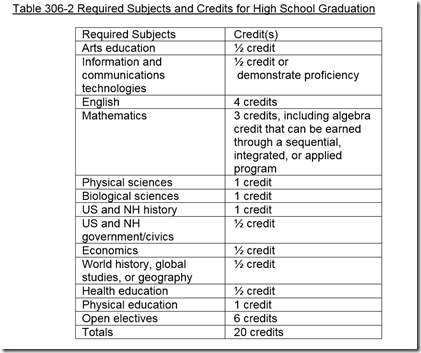
People keep asking me what required course I would remove to make room for a required computer science course. So I decided to take a look at current requirements for graduation in my home of New Hampshire. This is what I found:

From the state itself:

image

20 credits? Five classes a day? And 6 of those credits are elective? Seems like a lot of room to me. Now of course in New Hampshire local school have a lot of control so I looked into the local public high school.

image

Twelve and a half elective requirements. Seems like an additional credit of CS could be added without having fewer of any other required courses.

I teach at a private Catholic high school that requires 4 credits of Religion and still have room for a full year computer science requirement.

So where is the problem fitting in a required computer science course?

Thursday, September 28, 2017

Fear and Loathing and Required Computer Science Education

It seems like every time someone suggests that computer science be a required school subject someone (sometimes several people) bring up on particular objection – that making a subject required makes I a turn off for students. The problem is stated several ways. For example

  • Requiring CS would result in students with unenthusiastic or unprepared teachers
  • Required CS courses would have to be watered down courses
  • Required CS courses force the wrong kind of motivation (extrinsic rather than intrinsic)

While those are all valid concerns are they enough to prevent us from requiring CS? They are apparently not enough to keep us from requiring Math, English, Science, and (in many places) World Languages.

A question that needs to be asked as well is, if students are never exposed to computer science how will they become excited by it? I’m sure we all know someone who got excited about writing from a required English course. Or a math wiz who didn’t know they loved math until that one inspired teacher of a required course got them interested. And the same for just about any subject.

Are we going to turn off some students though poor teaching? Perhaps but that is no more a fear for CS than any other subject. We’re even more likely to excite more students if more students take CS though. Sure the idea of requiring CS is scary to some and the fears must be addressed. But we’re never going to achieve computer science knowledge for everyone if we limit CS courses to people who already know they want to learn it.

Tuesday, September 19, 2017

Designing Projects for Programming Students

Last night a teacher friend of mine gave me a USB stick with the projects he uses with his students. I have projects for C++, Python, Java, and Visual Basic from him. Oh and there are 60+ in each category. It’s going to take me quite some time to go through them. It’s got me thinking about projects in general though.

Keeping students interested is important when designing and assigning projects. The projects I’ve looked at from my friend and the ones I have used myself over the years seem to mostly do that. Although knowing what students a quarter your age will find interesting can be tricky.

For me a big issue is that the more interesting a project is the more programming features and functionality it usually requires. For that reason I am moving up where in the curriculum I teach reading files this year. Projects become a lot more interesting when larger amounts of data are being processed. It also means i can get some good test data in front of students.

Determining  the level of scaffolding is another trick. The projects I am looking at show a wide range of scaffolding. And that makes sense of course. In the early projects you want some solid scaffolding to avoid too much frustration. Over time as students get more comfortable with problem solving and how things work you want less. I usually have students work on a concept with me (following my demo step by step) as one way of scaffolding.

Hinting is also an issue once a project has been assigned. I’ve written about that before - Would You Like a Hint? The more interesting the project the more willing students seem to be to figure things out on their own though.

Sources for projects are an other interesting thing to think about. Some of my favorite projects have come from student suggestions. Others from textbooks. Still more for other teachers.

BTW are you sharing cool projects with others? Blogs or conference talks are both great ways to do that. Do you know about Nifty Assignments from years of SIGCSE conferences? Many of them are for more advanced students but some will work with students still at the beginner ranks.

Other sources are informal conversations like at CSTA Chapter Meetings or other events. I’ve been on a number of advisory boards for career technical programs. Those teachers have shared lots of great project ideas over the years. The Advanced Placement readings are still another great venue for sharing project ideas.  Always look for chances to learn from other teachers.

So where do you get project ideas? What makes for a good project for you?

Monday, September 18, 2017

Congressional App Challenge Launches Today

Something that looks interesting at least in Congressional Districts where there is a sponsor. Visit the web site to check it out.


app-challenge-logo-transparent

Congressional App Challenge Launches Today!

It begins today! The third annual Congressional App Challenge (CAC) has now launched and will run through November 1, 2017. The CAC is a congressional initiative to encourage student engagement in coding and computer science through local app challenges hosted by the Members of Congress. This year, there are over 165 Members of Congress signed up to participate!

The CAC aims to bridge the gender, geographic, and racial gaps in tech. In its first two years, the program yielded 239 challenges across 33 states. Over 1,150 apps were created by nearly 4,000 students, and participant demographics surpassed all industry diversity metrics, with young women representing 30% of all competitors. This year, the Congressional App Challenge will strive to build upon those numbers.

During the next 14 weeks, thousands of students in participating Congressional districts will create and submit their own original applications, that will be evaluated by panels of local judges.The Members of Congress will announce the winners during Computer Science Education Week in early December. Winners will be honored by their Member of Congress. More prizes will be announced throughout the Challenge.

The CAC was created because Congress recognizes how essential computer science and STEM skills are for economic growth and innovation, and that the U.S. is currently experiencing a dearth of adequately trained technical talent. By some estimates there are nearly a quarter of a million unfilled programming jobs in the US, right now. The CAC is a congressional effort to maintain American competitiveness, by proactively inspiring our youth and encouraging them to pursue these crucial skills.

The Challenge owes gratitude to Representatives Bob Goodlatte and Anna G. Eshoo, co-chairs of the Congressional Internet Caucus, who requested and supported the creation of the CAC. Challenge execution is supported by the efforts of our Advisory Board, which includes the American Indian Science and Engineering Society, the Computer Science Teachers Association, Girls Who Code, Hispanic Heritage Foundation, Capital One, and Cisco, as well as a broad coalition of CS-focused partners.

For more information about the Congressional App Challenge, please visit CongressionalAppChallenge.us. If you are interested getting involved or in supporting the Congressional App Challenge, please contact our Director, Rachel Decoste, at rdecoste@congressionalappchallenge.us.

Friday, September 15, 2017

Illustrating the Difference Between Bandwidth and Latency

Earlier this week my AP CS Principles classes were discussing the difference between latency and bandwidth. My curriculum resource (I’m using the curriculum from code.org) describes these two words like this:

  • Bandwidth - Transmission capacity measure by bit rate
  • Latency - Time it takes for a bit to travel from its sender to its receiver.

These are useful descriptions but how to make that real for students? Today I found two great examples of high bandwidth but low latency.

BandwidthOne was in the form of this graphic on the right. The latency is slow. It takes a lot of time for the pigeon to fly to the other site. So moving one bit or even byte at a time would not be a good idea. On the other hand since all the data gets to the destination at the same time the bandwidth is high. The story is a bit dated but still interesting.

I shared that graphic on Facebook and a friend of mine who works for Amazon Web Services pointed me to a more current story.

Amazon’s Snowmobile is Actually a Truck Hauling a Large Hard Drive

From the article:

“Using multiple semis to shuttle data around might seem like overkill. But for such massive amounts of data, hitting the open road is still the most efficient way to go. Even with a one gigabit per-second connection such as Google Fiber, uploading 100 petabytes over the internet would take more than 28 years. At an average speed of 65 mph, on the other hand, you could drive a Snowmobile from San Francisco to New York City in about 45 hours—about 4,970 gigabits per second.”

Now that is a story that speaks to moving really large amounts of data. And again, showing the difference between latency and bandwidth.

Thursday, September 14, 2017

Be a Router and Share Messages

The curriculum I am using for Advanced Placement Computer Science Principles is the excellent Code.Org curriculum. I really like the Internet Simulator that is involved in many of the early lesson in the Internet unit. It really lets students try a lot of things. I like to add a bit of my own flavor though and involving physical objects and activities is part of that. So today I had my students send messages through routers where students played that part of routers.

Here’s what I did. I semi-randomly assigned each student a two part address. The first number indicated a router and the second a student “connected” to that router. I randomly assigned a students to be routers. I selected the number of routers based on the number of students in the section. I think you need at least two routers but more would be better if the class size allows it.

imageI prepared a bunch of “message packets.” and handed a couple of them to each student who was not a router.

A list of students with their “IP addresses” was displayed on the board. I could have printed them out if I liked wasting paper but I don’t.

Students were to write out a question in the message field as well as the send to and return addresses (the codes I had created) and send the message. They were to give the message to the “router” they were connected to. The router was then responsible for either handing the message directly to the intended recipient if they were “on the same router” or pass it along to the appropriate router if not. That router was responsible for passing it to the recipient connected to them.

After a bunch of messages and replies were sent we discussed what happened. Some good things happened. Well bad things depending on how you want to look at them. I love learning moments so they were good from my point of view.

One router was overwhelmed with messages and took a while to get them all to the right place. Great! Bottleneck simulated!

Some addresses were not well written and could not be delivered. I may send some messages like that myself next time to make sure that happens. Dropped message and what that means for the learning experience!

I did this with minimal discussion first so that students didn’t know exactly what to expect. I’m hopeful this made the later discussion and the exercise with the Internet Simulator.

What do you think? Look reasonable to you? What do you do to help students understand routers and what they do?

Wednesday, September 13, 2017

NCWIT Aspirations in Computing 2018

Several of my students have applied for this award and all found it quite worthwhile.There are many benefits for students in high school and college. It’s really helpful for girls and young women to be recognized for their interests and accomplishments in technology.


Calling all 9th-12th grade women and educators, as well as college women in tech! 2018 Aspirations in Computing award applications are open: https://www.aspirations.org.

  • Earn scholarships for college
  • Find computing internships
  • Connect with a large network of other technical young women
  • Discover resources to increase your knowledge of technology

See also Top 10 Reasons to Apply for the NCWIT Award for Aspirations in Computing

Tuesday, September 12, 2017

National Briefing Call on K-12 Computer Science Education

I'm told this will be very well worth the time. I may even join with my Advanced Placement Computer Science Principles students.


We are pleased to invite you to join an important national briefing call on K-12 computer science education and the Computer Science for All (CSforAll) movement Monday, September 18 at 2:00 pm ET featuring remarks from a very special guest (please join 5 minutes early as our featured guest will be speaking at the top of the call).


We will share important updates and progress towards Computer Science for All from key national leaders; mark the one-year anniversary of the launch of the CSforAll Consortium at the White House Summit on Computer Science for All; and provide a sneak peek into the agenda and speakers at the upcoming CSforAll Summit, October 16-17 at Washington University in St. Louis.


Don’t miss this important conversation on K-12 computer science in the US and the role we all can play in achieving CSforAll. To join, add this call to your calendar using the links below.

Feel free to share this opportunity with your networks. Students and educators are especially welcome.

image
You can also follow along via social media using #csforall.

September 18 @ 2pm ET

Conference Line: (888) 946-4716  //  Code: 3267553#

ADD TO YOUR CALENDAR:

iCalendar  •  Google Calendar  •  Outlook  •  Outlook Online  •  Yahoo! Calendar

Yet Another Example of the Importance of Good Names

A little Tuesday humor. I think I may use this to help students understand the importance of good variable names and other identifiers.

groundhog

Monday, September 11, 2017

Who Wants to be the DNS Server?

We’re studying how the Internet works in my AP CS Principles course. I wanted a little exercise to help students understand how DNS servers work and maybe through in a bit about address caching.  So I came up with a little role play to try out. I think it worked ok. I’ll try it again tomorrow with some more instructions.

Here’s what I did. I started by taking screen shots of a half dozen or so web sites. The usual suspects: Google, Apple, Microsoft, Twitter, CNN, MSNBC, and the school’s home page. I printed them out and assigned students to “serve” each site. An other students was assigned to be the DNS server. I handed him a form and asked him to record which student was “serving” each web site. So the address in this case was a student name.

Another student was assigned as the user and still another was assigned to act as their computer. The computer had their own sheet for looking up addresses (student names) for each web site. As we started it was empty. This would become the address cache for the computer.

The user asked the computer for a web page. If the address was known to the computer they asked the appropriate student to display the web page. If they address was not known the computer asked the DNS server for an address.  The DNS server would return the address which the computer would record in cache and then ask the server to display the page.  We ran through several request to see how this worked.

I did this before any detailed explanation of the process. I followed the role play with a video from code.org called THE INTERNET: IP Addresses and DNS that can be found on their collection of videos. Not surprisingly, this video went into some good detail on the very things we observed in the role play. I’m hoping that the combination of the role play, the video, and in-class discussion will help with both understanding and retention of the information.

What do you think? How would you add or change this? Do you do something similar?

Tuesday, September 05, 2017

Curriculum is Hard

Generally speaking I am a roll my own sort of teacher when it comes to curriculum. This year that is a bit overwhelming because I am teaching four different courses. Now two of them are easy. I have been teaching our freshmen Explorations in CS course for about four years now. It’s well set up. I’m not the only teacher teaching it and between us it’s all laid out pretty well. Sure we tweak it a bit every time we teach it but mostly it is good to go. Honors Programming (mostly sophomores and juniors) is also pretty solid. The other two courses not so much.

My Mobile Application Programming course is a total redo this year. I was not happy with how it went last year so I have switched to App Inventor. I’m putting things together from resources that are available from others (see http://appinventor.mit.edu/explore/) So a bit of mix and match with some ideas of my own. Still largely my own design in my eyes. It’s a one semester course and I know what I want to cover pretty well.

Advanced Placement Computer Science Principles is a whole different matter though. For one thing it is a full year. All my other courses are a single semester. It’s also more high stakes. My students will be taking the AP exam and like it or not we (them and me) will be judged a bit more seriously on the results. It’s not like the other courses in other ways as well. There are performance tasks to accomplish for example. In a sense they are just big project and I use projects all the time. But in an other they are different in that I am not designing my own rubric. I need students prepared properly so they can be graded by others. I want to get this right for my students.

imageSo for AP CS P I am using a pre-written curriculum. There are several great ones out there. There is The Beauty and Joy of Computing out of US Berkley for example. It looks really good but I didn’t want to use Snap!. Not that Snap! isn’t pretty cool but I wanted something different from what I was using in Mobile App Programming and AppInventor and Snap! are very similar.

imageMobile CSP also looks great but it uses AppInventor which, again, I wanted to avoid since I was already using it in another class. 

Yes I know that some people think using the same language over and over again is a great thing. Even a preferred thing. Miles Berry makes the case for One Language at a Time in a recent article. I disagree and I may elaborate on that in a future post.

So what did I go with? I went with the AP CS Principles curriculum from code.org. For programming it uses their app lab which uses both block and JavaScript. We’ll be moving into the JavaScript as much as possible when we get to the programming. JavaScript is a growing language and I see learning that as a good thing for my university bound students. They all know some Visual Basic and C# and a good number are also fairly fluent in Java.

But AP CS P is more than just programming which is one reason I am enjoying teaching it. Code.org has a lot of good resources for teaching that. Videos (short and interesting) and collaborative exercises. Right now students are using an internet simulator to create and use their own communications protocols. It seems to be going well so far. We’re only two weeks in of course but so far I think this is going to work well for me.

I’m still going to tweak things a bit as we go along. And next year, once I’m comfortable with the course and the curriculum I am sure I will tweak it more. Overall though I’m glad I am taking this route. Your mileage may vary of course.

What are you using and why? I’m especially interested in opinions on AP CS Principles curriculum.